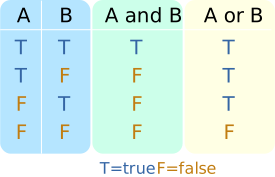
Where statements are joined by an "or" to make a new statement.
A disjunction is true if at least one of the original statements is true (the first, the second, or both).
It is only false when both statements are false.
Example: we stay home when it is raining or windy.
It is raining: we stay home
It is windy: we stay home
It is raining and windy: we stay home
It is not raining and not windy: we go out
Copyright © 2025 Rod Pierce